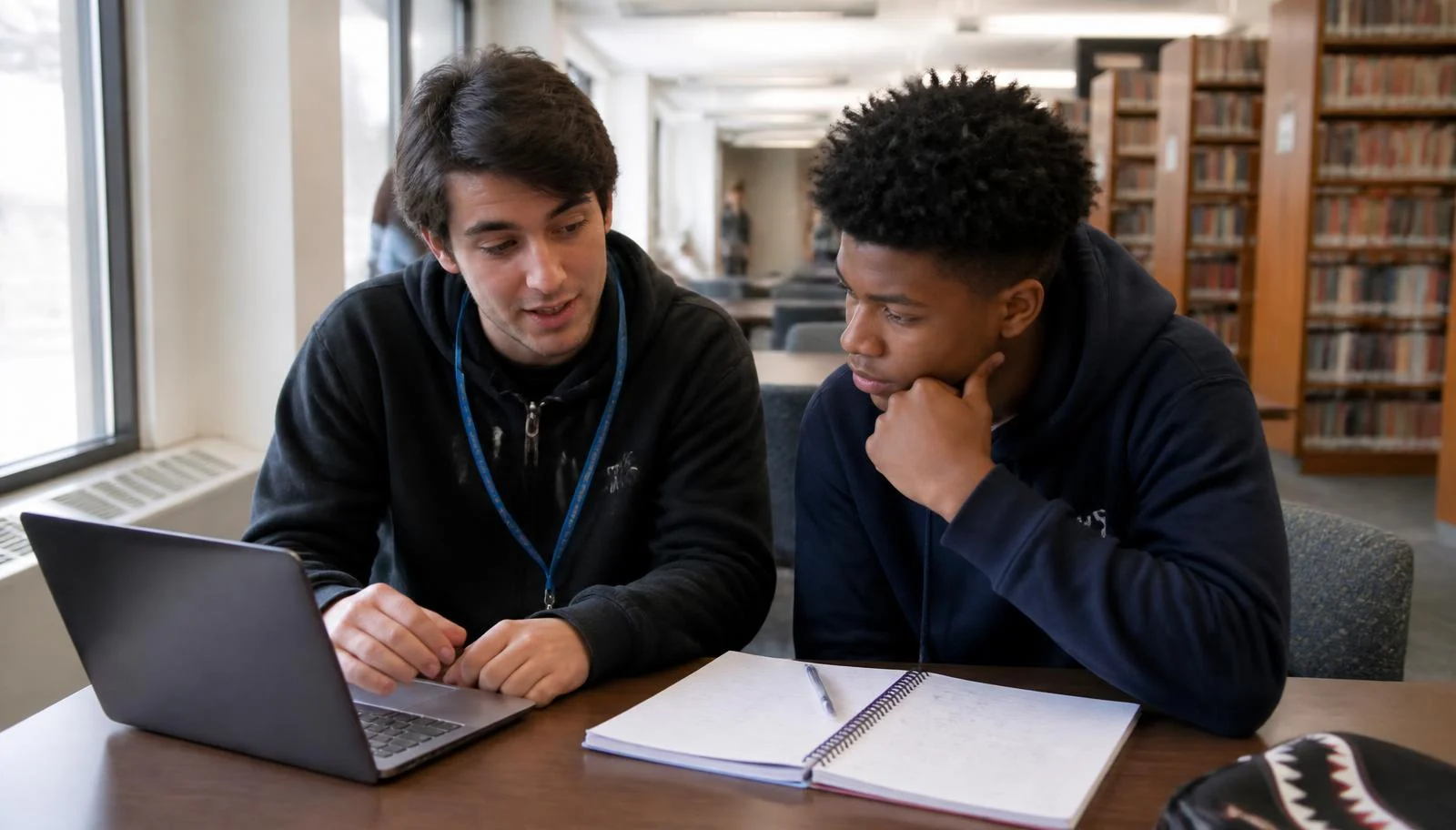
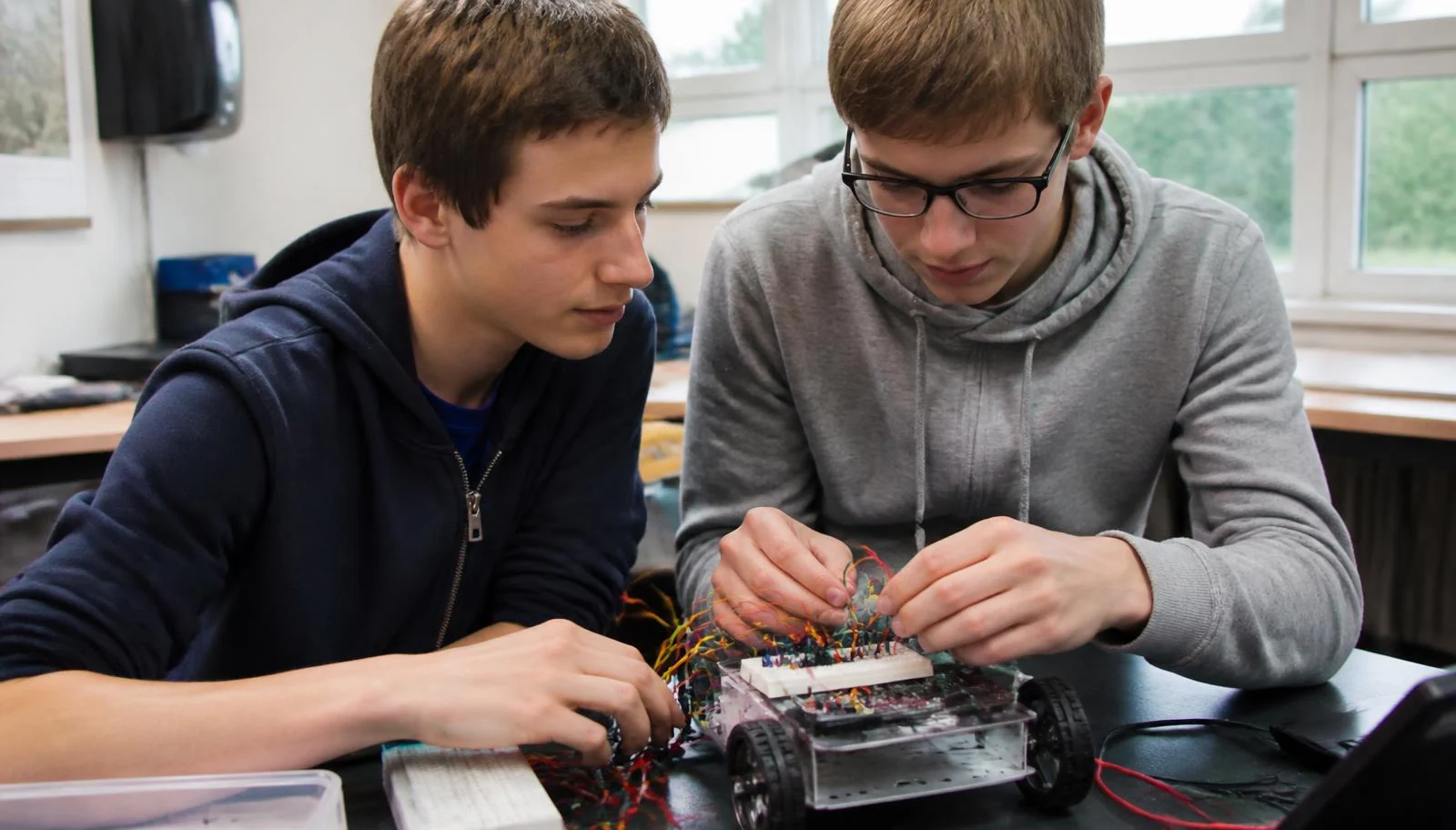
A look inside our build days, where students wire, test and rebuild until the idea finally moves.
A build day starts with a table full of parts and ends with something that moves, lights up or measures the world. In between there is a lot of trial, error and quiet problem solving, which is exactly where the learning happens.
These five projects are the ones we return to most often, because each of them turns an abstract lesson into a machine a student can hold.
1. The line following robot
Students wire two motors, a driver board and a pair of infrared sensors, then write the logic that keeps the robot on a strip of tape. The first run almost never works, and that is the point: debugging a real circuit teaches patience faster than any worksheet.
2. The weather station
A temperature and humidity sensor, a small display and a few lines of code turn a desk into a data collection site. Once the readings start flowing, we talk about averages, outliers and how scientists decide whether a measurement can be trusted.
3. The hydraulic arm
Built from syringes, tubing and cardboard, this project needs no electronics at all. It is a favorite for younger students because pressure, force and leverage become visible the moment the arm lifts its first object.
4. The solar charger
Students measure voltage under different light conditions, then design a small panel array that can charge a battery pack. The conversation naturally moves toward energy, efficiency and the trade offs engineers make every day.
5. The reaction timer
A button, a light and a microcontroller become a tool for running a real experiment on the group. Students collect their own data, compare results and learn how to present findings without overstating them.
What students take home
The finished object matters less than the habit it builds. Students leave knowing that a first attempt that fails is information, not a verdict, and that curiosity is a skill they can practice.